
The Bard in the Borderlands
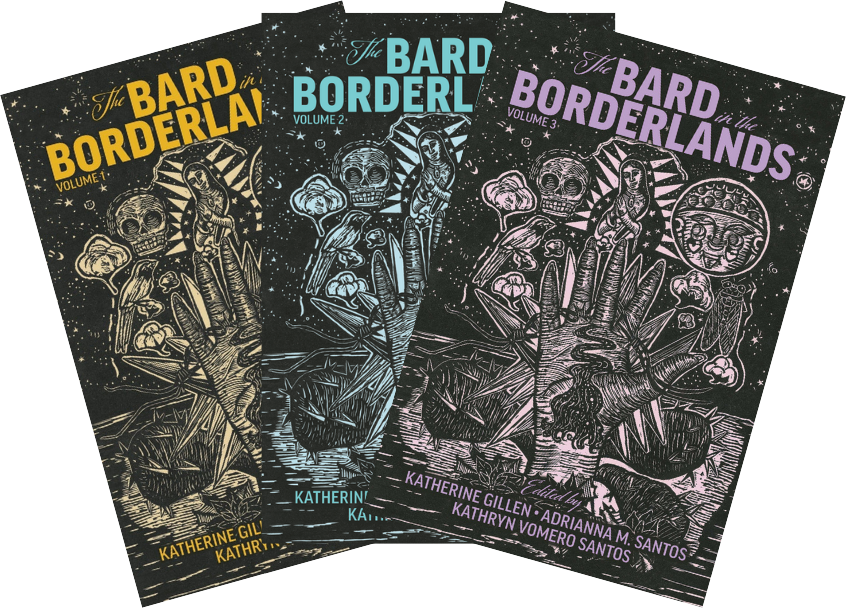
Cover Illustration: Celeste De Luna, Healing Borderland Hand, 2022 (linocut print)
For several decades, Chicanx and Indigenous theatermakers have been repurposing Shakespeare’s plays to reflect the histories and lived realities of the US–Mexico Borderlands and to create space to tell stories of and for La Frontera. Celebrating this rich tradition, The Bard in the Borderlands: An Anthology of Shakespeare Appropriations en La Frontera brings a wide range of Borderlands Shakespeare plays together for the first time in a three-volume open-access scholarly edition. This anthology celebrates the dynamic, multilingual reworking of canon and place that defines Borderlands Shakespeare, and it situates these geographically and temporally diverse plays within the robust study of Shakespeare’s global afterlives.
Volume 1
- The Language of Flowers by Edit Villarreal
- Kino and Teresa by James Lujan
- The Tragic Corrido of Romeo and Lupe by Seres Jaime Magaña
- Hamlet, El Príncipe de Denmark by Tara Moses
- Ofélio by Joshua Inocéncio
- ¡O Romeo! by Olga Sanchez Saltveit
Volume 2
- The Merchant of Santa Fe by Ramón A. Flores and Lynn Knight
- Invierno by José Cruz González
- Measure for Measure | Medida por medida by Bernardo Mazón Daher
- La Comedia of Errors by Lydia G. Garcia and Bill Rauch
Volume 3
- I-DJ by Gregg Barrios
- El Henry by Herbert Siguenza
- Marqués: A Narco Macbeth by Kepano Stephen Richter and Nick Andrade
- Rough Magic by Andrew Siañez-De La O
Praise for the Anthology
The open-access anthology is an exemplary model of public humanities that foregrounds marginalized voices and exhibits inclusive practices in academic scholarship and theatrical performance.
[The Bard in the Borderlands] champions how fresh perspectives can lead to transformative actions, not just when it comes to shaping Shakespearean appropriations but also when it comes to impacting readers’ communities in more just and ethical ways
By placing these Shakespearean appropriations within their originating cultural milieus, specifically ones that value admixtures and hybridity, the introductions offer readers a guided tour through aesthetic sensibilities that take and remake from various sources.